
Combination of virtual anatomy and real anatomical specimen
Meiwo Science is a large manufacturer appointed by National Ministry of Education and one of the large models producing factory in China, Specialized in plastination technique, soft silicone anatomy models, high simulation anatomy models and relative production, The main products are Plastination for animals, soft silicone anatomy models, high simulation anatomy models, human & animal anatomy softwares, embedded specimens and biological microscope slides, etc.
Meiwo factory lab do deep research and development for plastination and silicone anatomy model and do professional plastination from step by step, for example, embalming and fixation, anatomical dissection, removal water and fatty, forced impregnation, position, Harden, etc. We are glad to teach you the more knowledge about plastination, silicone anatomy models, anatomy softwares and also can see our real animal plastinated specimens, silicone anatomy models, anatomy softwares...
According to the academic exchange plan of the CSAS in 2022, sponsored by the Nursing Anatomy Branch of the CSAS and undertaken by Hexi College in Zhangye City, Gansu Province, The 17th Annual Conference of Nursing Anatomy, co-organized by Gansu Anatomy Society, Guangdong Anatomy Society and Anatomy Research Magazine, will be held in Hexi College, Zhangye City, Gansu Province from July 17 to 21, 2022.
Due to the proposal of the concept of "meta-universe" and the development of artificial intelligence technology, the virtualization of real human body and the reality of virtual human body are accelerating, and the informatization of human body structure and function has ushered in an important period of strategic opportunity. In order to further promote the research and development of digital human body and related products in China, The CSAS decides to hold the Digital Human Science and Technology Frontier and Application Forum in Jinan city from 20th to 22th, May in 2022 . Considering the current situation of COVID-19 prevention and control in China, the meeting was conducted in a combination of offline and online methods
The new morphology virtual anatomy software for medical college as an important part of microbiology teaching has been finshed and all the equipments have also been installed.
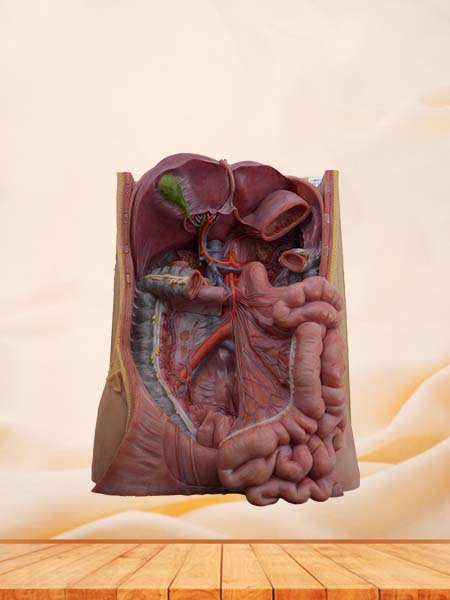
Meiwo liver, gallbladder, pancreas, and duodenum anatomical models is made of food-grade soft silicone, which is non-toxic, odorless, safe, and environmentally friendly. They simulate the real texture of the liver, gallbladder, pancreas, and duodenum, such as the softness and resilience of the liver and the elastic sac-like structure of the gallbladder, providing tactile feedback close to living tissue and enhancing the realism of manipulation. The material is resistant to high-temperature sterilization (such as alcohol wiping), suitable for repeated cleaning in medical environments, and avoids bacterial growth. The silicone material of the model is drop-resistant and bend-resistant, can withstand repeated disassembly and cleaning, and is not prone to aging or deformation with long-term use, reducing the cost of teaching materials. Precise anatomical details are provided, showcasing the left and right lobes of the liver, the fundus, body, and neck of the gallbladder, spiral folds, the head, body, and tail of the pancreas, the stomach, spleen, upper duodenum, descending duodenum, horizontal duodenum, ascending duodenum, circular folds, jejunum, cystic duct, common hepatic duct, bile duct, accessory pancreatic duct, pancreatic duct, minor and major duodenal papillae, celiac trunk, left gastric artery, splenic artery, common hepatic artery, proper hepatic artery, gastroduodenal artery, superior mesenteric artery,...
Human eye anatomy models are essential teaching tools for medical students and ophthalmologists learning about eye structure, refractive principles, and surgical approaches. They visually demonstrate the intricate structures of the cornea, lens, and retina, enhancing learning efficiency. Meiwo Science eye anatomy model is made of environmentally friendly soft silicone, featuring a realistic structure, safety, non-toxicity, impact resistance, and easy cleaning. It showcases structures such as the iris, ciliary body, choroid, neural disc, macular lens, and vitreous body. Human eye Anatomy models are widely used in medical school teaching for ophthalmology, anatomy, and clinical skills training. They possess highly realistic structures and are easy to manipulate, simulating the tissue layers, anatomical relationships, and physiological functions of a real eye. The model uses multi-layered composite materials to accurately reproduce key structures such as the cornea, iris, lens, vitreous body, and retina. It is suitable for both basic theoretical teaching and clinical skills training. A key medical university in China has introduced eye models into its ophthalmology laboratory course, replacing traditional cadaver specimen teaching. Teachers demonstrated the entire cataract extraction procedure using eye models, and students performed simulated surgeries in groups, with a real-time feedback system assessing the accuracy of their procedures. After...
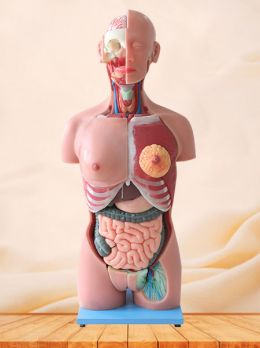
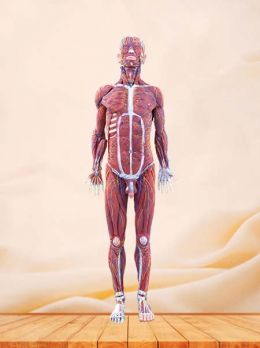
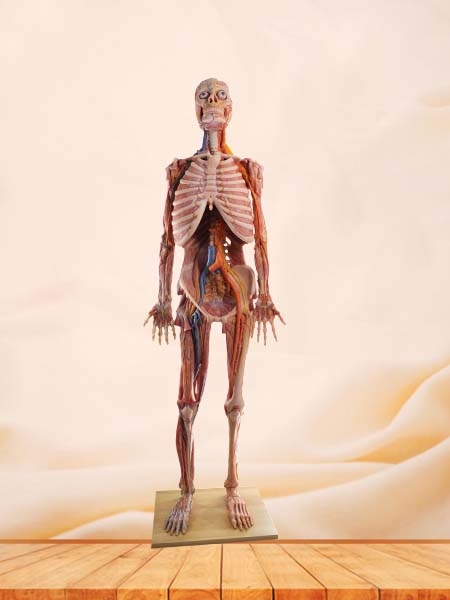
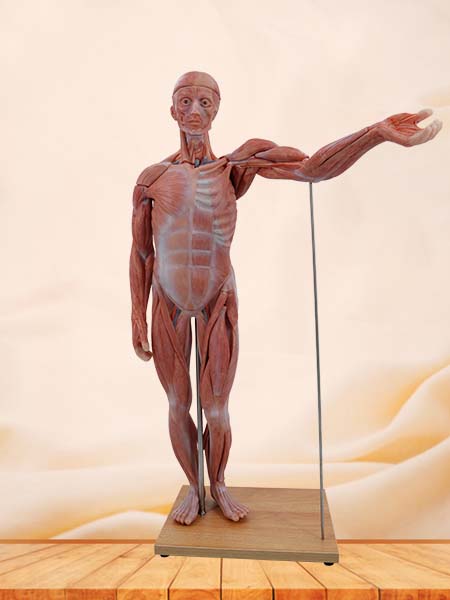
Medical anatomical models are essential tools in medical education and research. They depict the human body in three dimensions, helping people better understand its complex structure. These models play a vital role in medicine, providing doctors, medical students, and researchers with intuitive learning and research platforms. Silicone anatomical models, made of medical-grade silicone, use realistic designs to recreate the structure of human organs. They are used in medical teaching for anatomical demonstrations, surgical simulations, and patient education. Silicone anatomical models primarily involve anatomical modeling, model engraving, mold development, and silicone infusion molding. Meiwo Science has achieved mass production of basic anatomical models (such as human body and individual organs). The production process includes mold engraving, silicone mixing, vacuum infusion, and surface coloring. Silicone anatomical models from Meiwo Science, combining virtual and real elements with digital anatomy systems, are particularly popular among medical schools. Medical anatomical models play an irreplaceable role in medical education. For medical students, studying anatomical models allows them to gain a more intuitive understanding of the various organs and structures of the human body and deepen their understanding of human physiological functions. With the continuous advancement of technology, medical anatomical models will usher in more development opportunities....
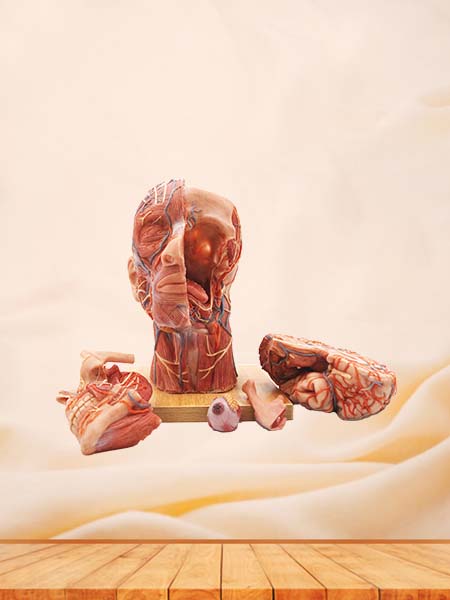
The core value of anatomical models lies in their ability to transform complex and abstract human anatomy into intuitive, tangible three-dimensional entities, significantly improving the efficiency and quality of medical education and clinical practice. Human anatomy involves numerous three-dimensional spatial relationships, such as the pathways of nerves, blood vessel branches, and organ adjacencies. Accurate understanding is difficult to achieve solely through two-dimensional images or textual descriptions. Anatomical models, by precisely reproducing the spatial layout of structures such as bones, muscles, nerves, and blood vessels, allow learners to grasp complex anatomical relationships in a tangible way. For example, a facial nervous system model can clearly demonstrate the winding path and branching distribution of the trigeminal nerve within the temporal bone, helping students translate terms like “supraorbital foramen” and “stylomastoid foramen” into concrete spatial coordinates. This multi-sensory learning approach significantly reduces cognitive load and enhances memory depth. Anatomy models are not only teaching tools but also bridges for skills training. They support repeated disassembly and reassembly, and simulated operations, allowing students to practice basic clinical skills such as physical examination, puncture, and intubation in a risk-free environment. For example, heart models can demonstrate the structure of heart chambers and the location of...
In 1543, Vesalius’s *De humani corporis fabrica* (On the Fabric of the Human Body) overturned Galen’s fallacies based on animal anatomy, marking the birth of modern medicine. Anatomy, as the “language” and “map” of medicine, has always served as a bridge connecting basic theory and clinical practice. Human anatomical models—from 16th-century Florentine wax figures to 21st-century virtual reality—act as the material embodiment of anatomy, continuously pushing the boundaries of medical knowledge. Anatomy, as the starting point of medical education, provides the knowledge framework for subsequent medical courses. The introduction of human anatomical models has greatly revolutionized traditional teaching methods, making abstract anatomical knowledge intuitive and three-dimensional. In physiology classes, a heart model clearly presents the internal structure of the heart, including the layers of the myocardium, the opening and closing mechanism of valves, and the distribution of the cardiac conduction system. Through observation and manipulation of models, students can gain a deeper understanding of the heart’s pumping process, thereby better mastering the physiological mechanisms of blood circulation. In clinical medical studies, anatomy is integral to all disciplines, including internal medicine, surgery, obstetrics and gynecology, and pediatrics. Surgeons must have a precise understanding of the anatomical structures of the surgical site...
In an era where gene-editing technology reshapes life and brain-computer interfaces break through the boundaries between humans and machines, life science museums have transcended the traditional museum realm, becoming a super hub connecting scientific breakthroughs with public understanding. Using space as paper and technology as ink, life science museums are writing a life revelation spanning ancient and modern times. They are not merely containers displaying the mysteries of the human body, but also intelligent reaction vessels stimulating leaps in human cognition. Below, Meiwo Science will analyze how life science museums convey scientific spirit and life wisdom through design from four dimensions: design direction, spatial narrative, interactive technology, and humanistic care. The design concept of a life science museum should integrate four elements: science, education, art, and interaction to achieve effective knowledge dissemination and visitor attraction. First, scientific rigor is the cornerstone of the design; all exhibits must undergo rigorous verification to ensure the accuracy and authority of the information. This not only enhances the visitor’s trust in the exhibition but also provides a solid foundation for learning. Second, educational goals are particularly important, especially when targeting young people. The design should present complex life science concepts in an easily understandable...